Space Survival Games Guide
On this page
In a survival game, the clock is your score and the game is always winning in the long run. There is no final wave to clear and no level to finish. Your job is to delay the inevitable for as long as possible. That changes how you should think about risk, space and power-ups, and this guide covers exactly that.
What makes a survival game different
Shooters reward destruction and dodgers reward distance. Survival games reward time, and they guarantee escalation on a schedule. Two of our games make the schedule explicit:
- In Space Survival, the threat level rises every 20 seconds, and your score is seconds survived multiplied by 10, plus kills and energy crystals.
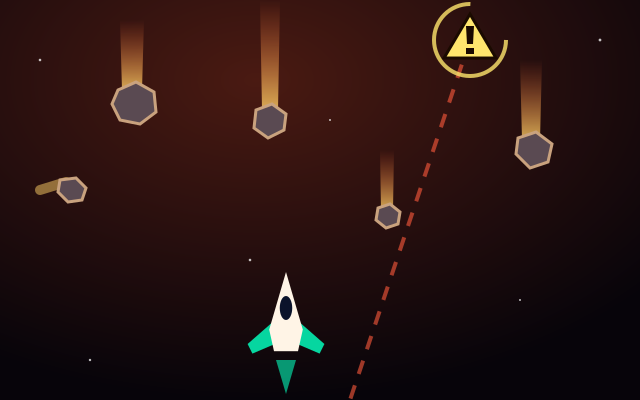
- In Meteor Escape, the storm level rises every 15 seconds, and your score is time survived plus a small bonus per storm level.
Because time is the main currency, every second you stay alive is worth the same whether you spent it doing something clever or simply drifting in a safe spot. That makes survival games more about avoiding mistakes than about flashy plays.
Our survival games compared
| Game | Difficulty | What ends a run | Main pressure |
|---|---|---|---|
| Space Survival | Hard | Hull drops from 3 to 0 | Asteroids, chaser drones and shooter drones in an open arena |
| Meteor Escape | Medium | One hit without a shield | Meteors from the top, later from the sides |
| Alien Escape | Hard | Losing all 3 lives | Patrol drones, laser gates and a countdown per zone |
| Cosmic Runner | Easy | One crash | Craters, rocks and drones at rising speed |
Space Survival and Meteor Escape are survival in the purest sense. Alien Escape and Cosmic Runner blend survival with progress: you escape zones or cover distance, but staying alive is still the core skill.
Arena positioning: own the middle
In an open arena, where you stand matters more than how fast you react. A few rules hold up well in Space Survival and Meteor Escape:
- Stay away from corners. A corner removes half of your escape directions. In Meteor Escape, once meteors come from the sides, edges become especially dangerous.
- Drift, do not dash. Constant small movements keep your options open. Large dashes across the arena often carry you into something you did not see.
- Return to open space after every dodge. Treat the center area as home, and come back to it whenever the pressure eases.
Handling chasers and shooters
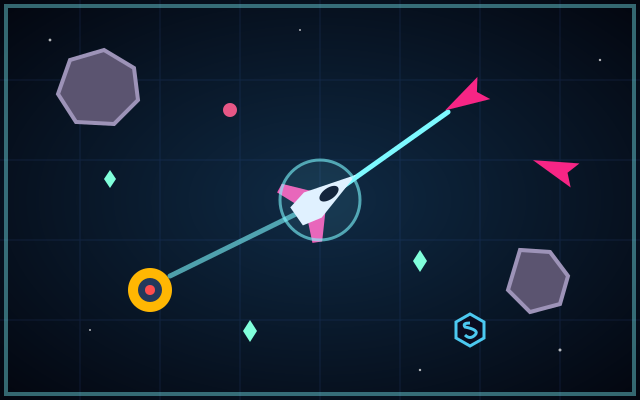
Space Survival adds enemies that react to you. Chaser drones follow you, and shooter drones fire at you. Since your ship fires automatically at the nearest threat, you never aim, but you do decide which threat is nearest.
The classic technique here is kiting: moving in a wide, steady arc so chasers follow in a line behind you while your automatic fire picks them off as they get close. Kiting works well because it turns the chasers' strength, following you, into predictability. Two cautions:
- A drifting asteroid that happens to be nearest will draw your fire. If a shooter drone is the real problem, move so that it becomes the closest target.
- Do not kite into unexplored parts of the arena. Circle through space you have just checked.
Destroyed threats drop energy crystals that add to your score. Collect them when they are on your path, but a crystal is never worth a hull point.
Timing power-ups
Survival power-ups are about buying time. In Space Survival you can find Shield, Slow Motion, Magnet (which pulls crystals toward you) and Rapid Fire. Meteor Escape has an occasional Shield pickup, as does Asteroid Dodge.
- Shield is the most valuable in any one-hit game. In Meteor Escape it is the difference between ending the run and shrugging off a mistake.
- Slow Motion is best saved for a crowded moment when the threat level has just risen.
- Magnet lets you collect crystals without leaving safe ground, which fits the survival mindset perfectly.
- Rapid Fire helps clear a growing cluster of drones before it becomes unmanageable.
The survival rule for pickups: only take a route to one if you would be comfortable standing on that route anyway. Our power-ups guide goes deeper on each type.
Example: surviving a zone in Alien Escape
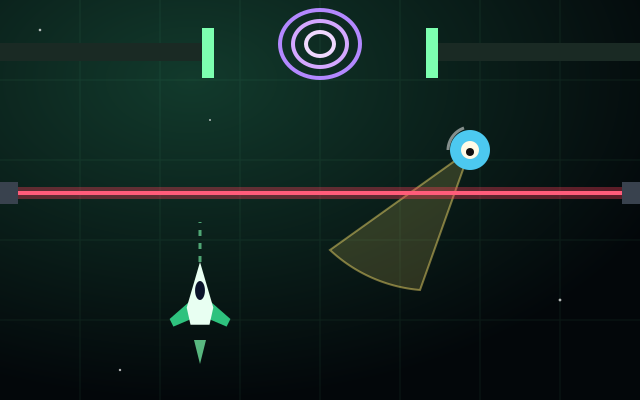
Alien Escape shows a different kind of survival pressure. You move upward through alien-controlled zones. Patrol drones sweep detection cones, and being spotted makes them chase you. Laser gates switch on and off on a rhythm. Each zone has a countdown timer to reach the exit gate.
A calm approach to a zone looks like this:
- If nothing is threatening you at the start of the zone, hold position for a moment and watch one full sweep of the nearest drone's cone.
- Watch the nearest laser gate cycle once so you know its rhythm.
- Move behind a sweep, arriving at the gate just as it switches off.
- Keep an eye on the countdown; waiting is useful, but running out of time is not.
Your score counts zones escaped plus a remaining-time bonus, so faster clears pay, but a lost life costs far more than a few seconds.
Managing escalation
The hardest moment in a survival game is right after the difficulty steps up, because your habits are still tuned to the previous level. In Space Survival that happens every 20 seconds; in Meteor Escape, every 15. Two habits help:
- Count the steps. If you know a step-up is coming, make sure you are in open space when it arrives.
- Reset your pace. After each step-up, widen your margins. The distance that was safe a moment ago is no longer enough.
The survival mindset
Survival games punish greed more than any other sub-genre. The players who last longest tend to accept small scoring losses, such as skipping a crystal or a risky pickup, in exchange for staying alive. Remember that in Space Survival, one extra threat level of survival is worth 200 points from time alone, which is usually more than the crystals you would risk your hull for. For broader scoring advice, see our high-score strategies, and find all titles in the Space Survival Games category.
Key takeaways
- Survival games score time, so avoiding mistakes matters more than flashy plays.
- Stay near open space, avoid corners and drift rather than dash.
- In Space Survival, move so the most dangerous threat is also the nearest one.
- Expect each difficulty step-up and widen your margins right after it.