Common Space Game Mistakes
On this page
Most short runs in space arcade games do not end because the game suddenly became impossible. They end because of a small number of habits that repeat across players and across games. The good news is that each of these mistakes has a specific, learnable fix. Here they are, grouped by what goes wrong.
Movement mistakes
Over-steering
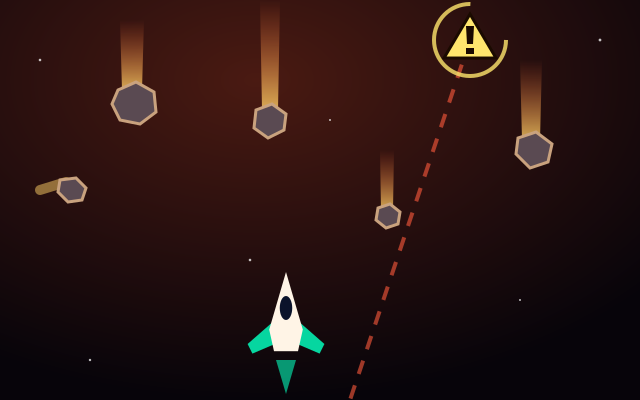
The single most common mistake is moving too much. Players steer away from one threat, overshoot the safe spot, and correct back into another. It is especially costly in games where you move freely around the whole screen, such as Meteor Escape.
Fix: move in short, purposeful steps and then stop. Ask "where do I need to be?" before pressing anything, rather than steering continuously and hoping.
Holding thrust too long
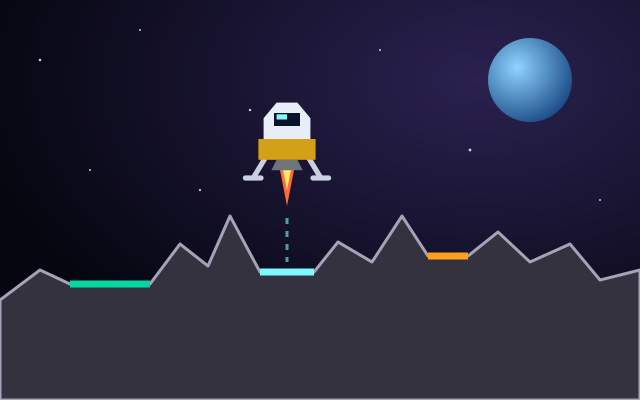
In thrust-based games, velocity builds up and stays. In Rocket Landing, a long burn that feels necessary at the time often leaves you rising or drifting sideways with no fuel to spare for the correction.
Fix: use short bursts and watch the speed readouts. The HUD tells you OK or TOO FAST; aim to see OK well before you reach the pad, not in the final second. Our space game physics explainer covers why momentum behaves this way.
Getting trapped at the edges
Edges feel safe because fewer threats seem to come from there, but they halve your escape routes. In Meteor Escape this gets worse over time: as the storm grows, meteors arrive from the sides too.
Fix: make the middle of the play area your home position and return to it between dodges.
Attention mistakes
Watching your own ship
Your ship is the one thing on screen you already control. Staring at it means you see threats late.
Fix: keep your eyes a little ahead of your ship, where the next danger will come from. In falling-hazard games, that means looking higher up the screen than feels natural.
Ignoring warnings and the HUD
Games tell you a lot, and players often ignore it. In Meteor Escape, large meteors are announced by a flashing warning marker first. In Alien Escape, each zone has a countdown timer and laser gates switch on and off on a rhythm. Rocket Landing shows your speeds. All of these are free information.
Fix: glance at the HUD at calm moments, and treat any warning marker as a command to start moving now, not when the hazard appears.
Resource mistakes
Several games run on fuel, and fuel problems tend to arrive slowly, then all at once.
- Rocket Rush: fuel drains constantly and the run ends at zero. Players focused on dodging meteors and mines forget to route through fuel canisters until it is too late.
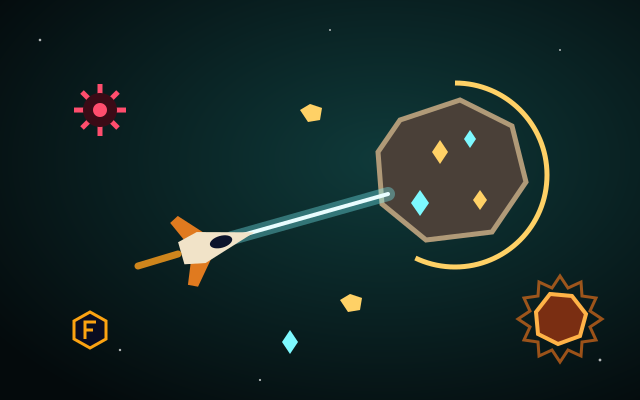
- Space Miner: fuel drains over time and also when moving. Wandering between distant ore asteroids burns fuel you need for the quota.
- Rocket Landing: fuel is limited and carries over between landings, so a wasteful first landing makes every later landing harder.
Fix: check fuel every time you finish dealing with a threat. In Space Miner, plan short routes between clusters of ore and pick up fuel cells on the way rather than making special trips.
Shooting mistakes
In shooters, how you fire matters as much as where you move.
| Mistake | Where it hurts | Fix |
|---|---|---|
| Firing at distant, moving targets | Alien Attack, where only 2 of your shots can be on screen | Shoot at targets likely to be hit; keep a shot available for divers |
| Letting go of fire | Space Shooter, where holding fire is continuous | Keep fire held whenever it is safe to |
| Shooting fodder while a gunner aims at you | Space Shooter | Prioritize enemies that fire aimed shots |
| Popping splitters near the planet | Galaxy Defender | Hit splitters early so you have time for the two pieces |
For how enemy roles shape these priorities, see our guide to how enemy waves work.
Risk mistakes
Chasing every pickup
Pickups are tempting, and crossing a hazard to reach one is a classic way to lose a life. Skipping one bonus item costs a few points; losing a life can cost the run.
Fix: only go for a pickup when the path there and back is clear, unless it is fuel you need to continue.
Greedy near misses
Asteroid Dodge rewards passing close to asteroids, and it ends the run on one hit without a shield. Players who start hunting near misses too early often end the run long before the points would have added up.
Fix: take near misses that happen naturally on your chosen path, and save deliberate close passes for when you have a shield.
Rushing past detection
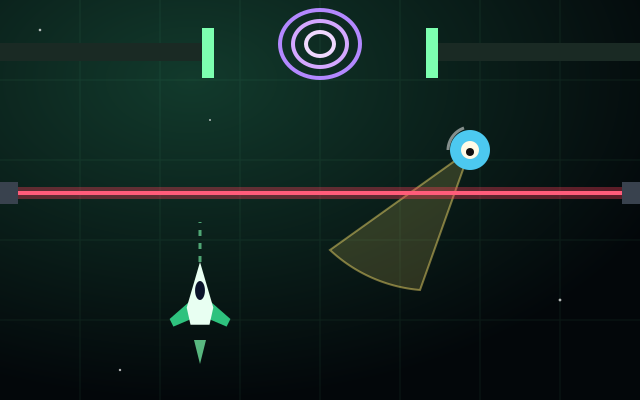
In Alien Escape, being spotted by a patrol drone's detection cone makes it chase you. Rushing through a zone to beat the countdown often means crossing a cone and gaining a pursuer.
Fix: spend a second watching how the cones sweep, then move behind them. A short wait usually costs less time than being chased.
Misreading a game's core rule
Some mistakes come from misunderstanding how a specific mechanic works:
- Planet Hopper: the pod launches in a straight line along its orbit direction, not outward from the planet. Releasing when the pod is "pointing at" the target sends it the wrong way.
- Cosmic Runner: spending the double jump right away leaves nothing for a crater that follows a rock. Hold the second press until you need it.
- Gravity Orbit: changing angle and power at the same time makes it impossible to learn from a failed attempt. Change one thing per attempt.
Session habits that hold you back
- Restarting at the first mistake. Recovering from a bad start is a skill you only learn by playing through it.
- Switching control layouts mid-session. Pick arrows or WASD, joystick or drag, and stay with it. Our keyboard controls guide helps you choose.
- Playing on when tired or tense. Reactions and judgment slip. Take a break between runs; P pauses any game.
Once these basics are under control, move on to high-score strategies for space games to start pushing your personal best.