Space Shooter Games Explained
On this page
A space shooter asks you to do two things at once: destroy what is coming at you and avoid being destroyed yourself. That sounds simple, but the way a shooter arranges the screen, limits your firepower and mixes its enemies changes how you should play. This guide breaks the sub-genre down and shows how each idea appears in our games.
The four shooter styles
Most space shooters fall into one of a few layouts. Recognizing the layout tells you where danger comes from and where you are safe.
| Style | How the screen works | Our example |
|---|---|---|
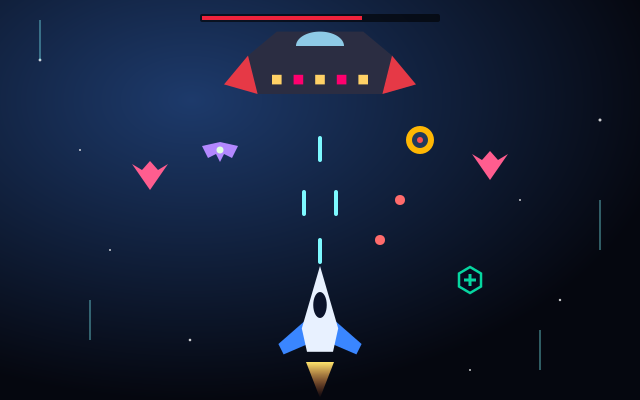
| Vertical-scrolling | You move around the lower area while enemies stream down from the top | Space Shooter |
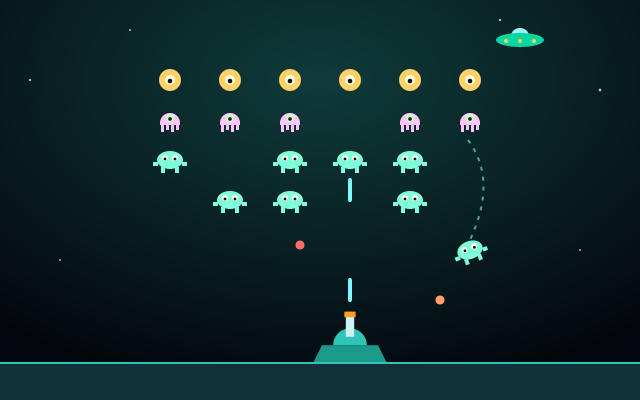
| Fixed-screen formation | Your cannon slides along the bottom beneath a marching block of enemies | Alien Attack |
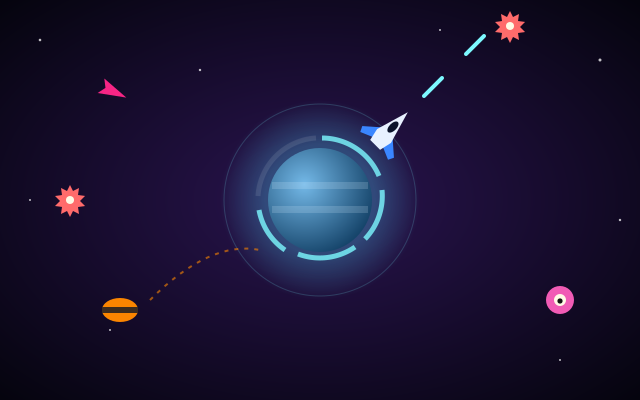
| Orbital defense | You circle a central planet and fire outward at enemies from every edge | Galaxy Defender |
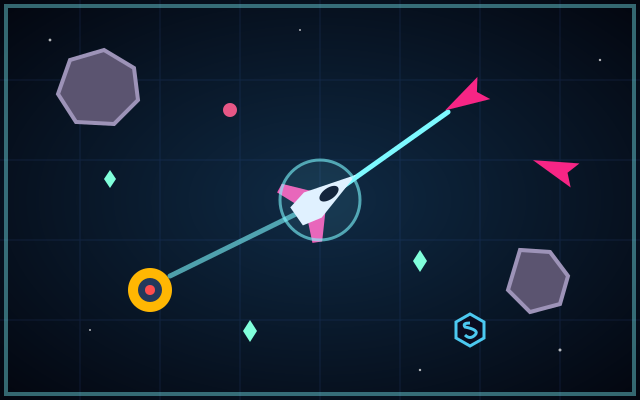
| Auto-fire arena | You only steer; your ship shoots the nearest threat by itself | Space Survival |
In the first two styles, danger comes mostly from one direction. In orbital defense it comes from all directions but you are tied to a circle. In an auto-fire arena, aiming is removed entirely and the game becomes about where you stand.
Enemy roles: why shooters mix enemy types
A shooter with one enemy type gets solved quickly. Good shooters give each enemy a job that pressures you in a different way. Space Shooter is a clear example:
- Scouts fly straight down. They test whether you are paying attention and fill the screen with easy targets.
- Weavers follow a sine-wave path. They punish players who fire only straight ahead without tracking movement.
- Gunners fire aimed shots at you. They force you to keep moving rather than parking in one spot.
- Armored tanks take several hits. They soak up your fire and make you choose between finishing them and dealing with something faster.
Galaxy Defender uses the same idea from a different angle: drones fly straight in, darts are fast, splitters break into two small enemies when hit, and bombers circle before diving. A useful habit in any shooter is to ask, for each new enemy, "what is this one trying to make me do?" The answer usually tells you the priority order.
Setting target priority
When the screen gets busy, you cannot shoot everything at once. A general priority order works in most shooters:
- Anything about to hit you or your objective. In Galaxy Defender, an enemy close to the planet is worth more attention than one far away, because each one that reaches the planet costs a point of its five-point shield.
- Enemies that shoot back. Gunners in Space Shooter create extra projectiles the longer they live.
- Enemies that multiply or become harder later. Hitting a splitter early, while it is still far from the planet, gives you time to handle the two small pieces.
- Tough, slow enemies. Armored tanks can often be chipped away while you handle faster threats.
- Everything else. Simple enemies are for filling your score between crises.
Fire management
Shooters differ a lot in how freely you can fire, and that changes your rhythm.
- Hold-to-fire: In Space Shooter you hold Space or the FIRE button for a steady stream. Your limiting factor is positioning, not ammunition, so keep firing and focus on where you are.
- Limited shots on screen: In Alien Attack you can have at most two of your shots on screen at once. A missed shot that travels all the way to the top blocks your next one, so shooting at close targets near the bottom of the formation fires faster in practice than spraying at the top.
- Aimed fire: In Galaxy Defender you fire outward from your orbit. On desktop you can aim with the mouse, since the ship moves to the pointer's angle, and click to fire; on touch you drag or tap on the game.
- Automatic fire: In Space Survival the ship fires at the nearest threat on its own. You control which threat is nearest by where you move.
Positioning beats reflexes
Fast reactions help, but most shooter deaths come from standing in the wrong place. A few positioning principles apply across styles:
- Stay near the middle of your range. In Space Shooter and Alien Attack, the edges leave you only one escape direction.
- Move before the danger arrives. Gunners in Space Shooter fire aimed shots, so a small, steady sideways drift makes them miss behind you.
- Deal with the lowest threats first. In fixed-screen games like Alien Attack, the formation sways and steps down. The lower it gets, the less time your shots take to land and the less time alien shots take to reach you, so clear the lowest rows first. If the formation reaches the bottom, the game ends regardless of your lives.
- Stay on the side of the circle that matters. In Galaxy Defender, moving around the orbit takes time, so rotate toward the busiest edge early rather than chasing each enemy after it appears.
Waves, motherships and escalation
Shooters are usually organized into waves. In Space Shooter, numbered waves become denser and faster, and every fifth wave brings a mothership with a health bar. Clearing a wave earns a bonus on top of the points for each enemy. In Alien Attack, clearing the formation starts a faster wave. Galaxy Defender's waves grow as you progress and also pay a wave-clear bonus.
The practical takeaway: the start of each wave is the calmest moment you will get, so use it to reposition. How games build and pace their waves is a subject of its own, covered in our guide to enemy waves in arcade games.
Power-ups in a shooter's rhythm
Power-ups change the math of a shooter for a short time. In Space Shooter, destroyed enemies can drop Rapid Fire, Spread Shot, Shield, Extra Life and a timed Score x2. Space Survival offers Shield, Slow Motion, Magnet and Rapid Fire. The shooter-specific lesson is simple: a pickup is only worth collecting if the route to it is safe. Flying into a column of weavers for a Spread Shot usually costs more than it gives. For a closer look at each type, see our power-ups guide.
Which shooter to try first
If you want steady action with lots of feedback, start with Space Shooter. If you prefer patient, precise shots, Alien Attack suits you. For a twist on direction and aiming, try Galaxy Defender, and if you want pure movement under pressure, Space Survival takes aiming away. All of them are collected in the Space Shooter Games category.
Key takeaways
- Identify the layout first: scrolling, fixed formation, orbital or auto-fire arena.
- Each enemy type pressures you differently; prioritize the ones that threaten you or your objective soonest.
- Match your firing habit to the game's rules, especially limited-shot games like Alien Attack.
- Good positioning prevents more hits than fast reflexes do.