Alien Arcade Games Guide
On this page
Aliens in arcade games are defined by how they move. Some march in lockstep, some break ranks to dive at you, some swarm in from every edge, and some patrol and wait for you to make a mistake. Recognizing the pattern is most of the battle. This guide covers the main alien behaviors and how to beat them in our games.
The four alien behavior patterns
Alien-themed arcade games tend to build on a small set of behaviors. Each one tests a different skill:
| Pattern | What the aliens do | Skill it tests | Where you see it |
|---|---|---|---|
| Marching formation | Move as a block, sway side to side and step down | Patience and accurate shots | Alien Attack |
| Divers | Leave the group or circle, then swoop at you | Reaction and prediction | Alien Attack, Galaxy Defender |
| Streams and swarms | Arrive in waves along set paths | Positioning and target priority | Space Shooter, Galaxy Defender |
| Patrols | Sweep an area and chase you if you are spotted | Observation and timing | Alien Escape |
Marching formations: Alien Attack
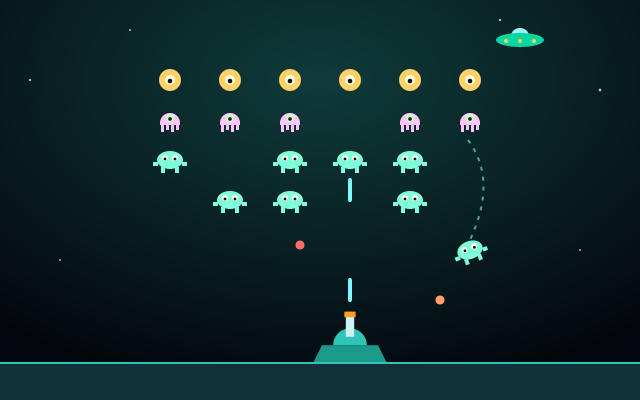
Alien Attack uses the formation pattern familiar from classic fixed-screen alien shooters. You move a cannon along the bottom with Left/Right or the joystick and shoot with Space or FIRE. A formation of aliens sways from side to side and steps down. There are three alien types, slow, medium and fast, and they are worth different point values. Individual aliens swoop down in dives, aliens drop shots, and occasionally a bonus saucer crosses the top.
The formation is predictable, which is both its weakness and its threat. The game ends if you run out of your three lives or if the formation reaches the bottom, so you are always on a clock. Practical tactics:
- Thin the bottom rows first. They are the closest to you, so your shots arrive quickly, and removing them raises the formation's lowest edge, which buys time before it can reach the bottom.
- Weigh points against reach. The three alien types carry different point values. When two targets are equally easy to hit, take the one worth more; when they are not, take the easy one.
- Respect the two-shot limit. You can have at most two of your shots on screen. Short, accurate shots at nearby aliens keep your fire available; long misses leave you waiting.
- Know when the wave ends. Clearing the formation starts a new, faster wave, so take a breath and reposition to the center before the next one arrives.
Dealing with divers
Divers are the aliens that break the rules of the pattern around them. In Alien Attack, individual aliens leave the formation to swoop at you. In Galaxy Defender, bombers circle before diving toward the planet.
Two principles help with any diver:
- Watch the start of the dive, not the end. A diver's direction is clearest as it leaves the group or finishes circling. That is when to decide whether to shoot it or move aside.
- Do not chase. Following a diver across the screen pulls you away from your safe position and into other shots. Let it come to you and fire when it lines up.
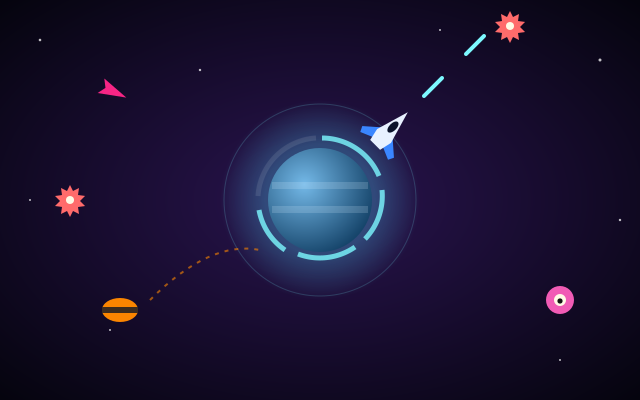
In Galaxy Defender, the bomber's circling phase is your best window. It is not yet heading for the planet, so you have time to rotate your ship around the orbit and line up a shot.
Streams and swarms from every edge
Some alien games do away with formations and send enemies in along paths. In Galaxy Defender they come from all edges toward a planet at the center: drones fly straight in, darts are fast, splitters break into two small ones, and bombers circle before diving. The planet's shield has five points, and each enemy that reaches it costs one.
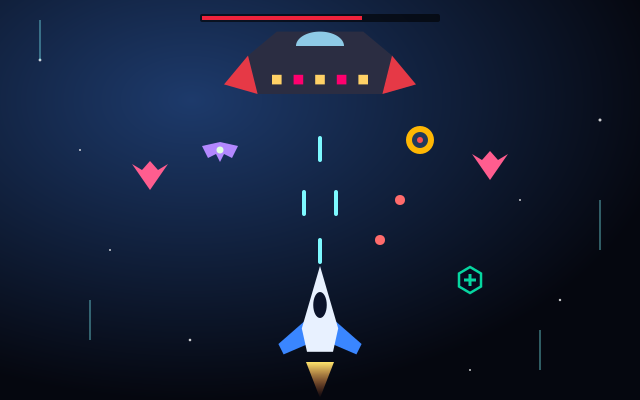
Space Shooter sends its hostiles down from the top: scouts fly straight, weavers follow a sine wave, gunners fire aimed shots and armored tanks take several hits. Every fifth wave brings a mothership with a health bar. The general lessons for swarms, such as target priority and fire management, are covered in our space shooter explainer, and the way waves grow is explained in our guide to enemy waves.
Patrols and detection: Alien Escape
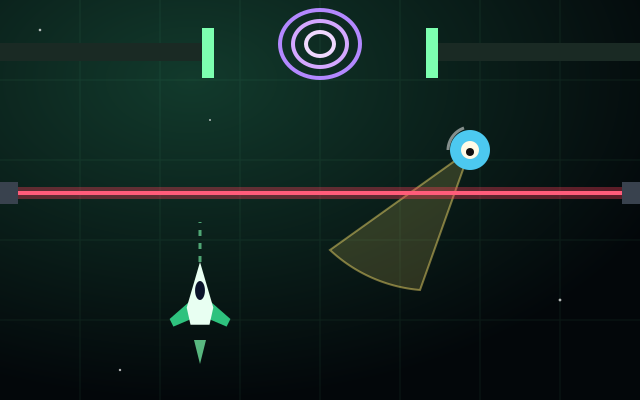
Alien Escape turns the alien game inside out. You do not fight at all. You move with the arrow keys, WASD or joystick and try to escape upward through alien-controlled zones. Patrol drones sweep detection cones, and being spotted makes them chase you. Laser gates switch on and off on a rhythm. Each zone has a countdown timer to reach the exit gate. You have three lives, and your score counts zones escaped plus a bonus for remaining time.
This is a pattern-reading game more than a reflex game:
- Learn each cone's sweep. A sweeping cone leaves the area it has just passed clear for a moment. Move into that space as the sweep passes.
- Count the gate rhythm. Watch a laser gate switch at least once before you commit to crossing it.
- If you are spotted, keep moving toward the exit. A chasing drone is dangerous, but stopping to hide wastes countdown time.
- Balance caution and the clock. Waiting too long is a slower way to fail than rushing, but it is still failing.
Choosing an alien game
- For patient, precise shooting against a single formation, play Alien Attack.
- For fast action with varied enemy types and motherships, play Space Shooter.
- For defending a planet from all directions, play Galaxy Defender.
- For evasion rather than combat, play Alien Escape, which is rated Hard.
All of our aliens are original designs drawn in code, and none of them are based on existing games or franchises. Browse them together in the Alien Arcade Games category.
Key takeaways
- Identify the alien pattern first: formation, divers, swarms or patrols.
- In Alien Attack, thin the bottom rows and use short, accurate shots to respect the two-shot limit.
- Read a diver at the start of its dive and let it come to you instead of chasing it.
- In Alien Escape, watch cone sweeps and gate rhythms, then commit before the countdown runs low.